
 By Dr. Rishikesh Dessai
 Feb 07, 2025
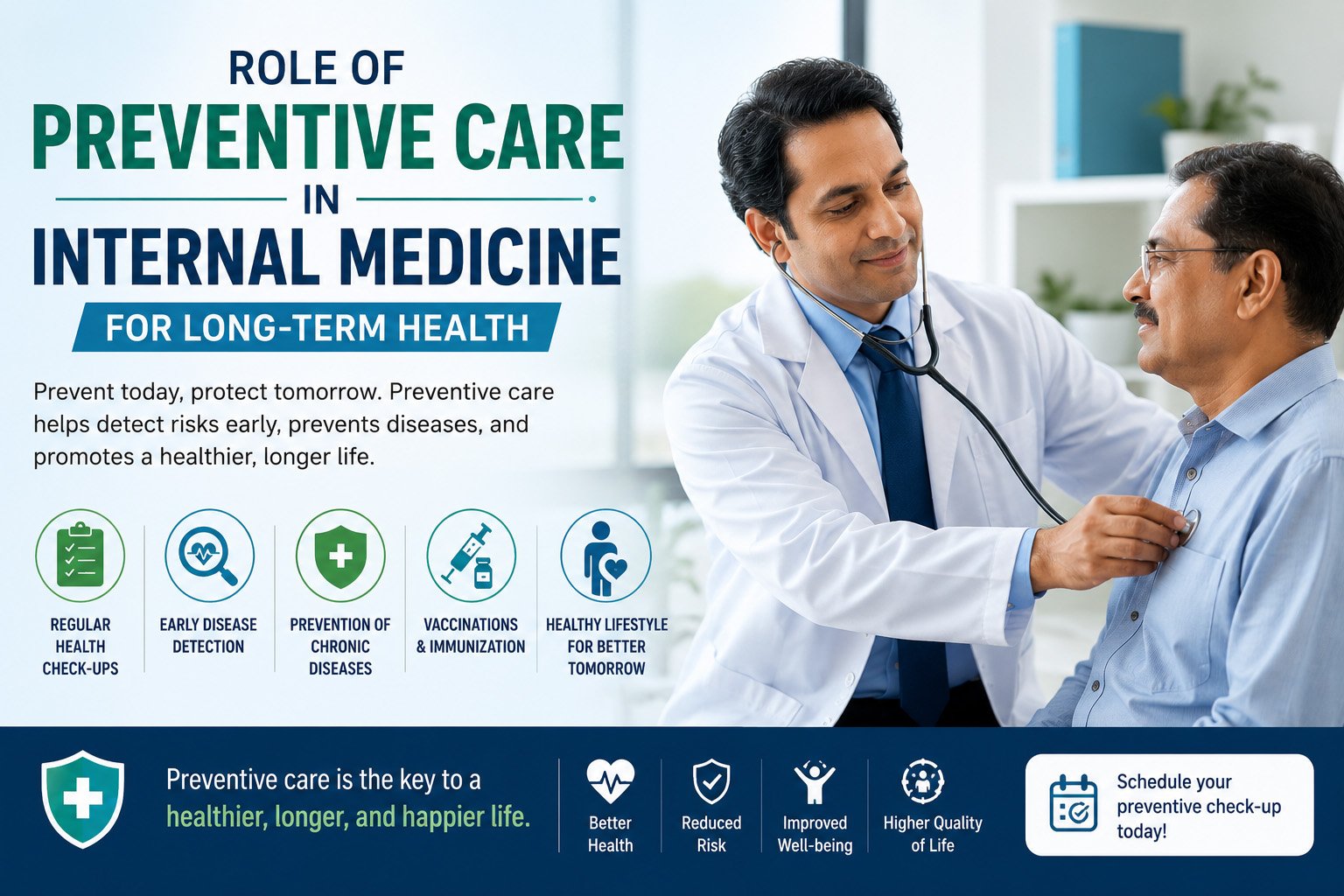
Are you aware of the crucial role preventive care plays in internal medicine? While many people visit a doctor only when they feel unwell, preventive care focuses on maintaining health, detecting diseases early, and reducing the risk of serious medical conditions before they develop. It is one of the most effective strategies for achieving long-term wellness and improving quality of life.
Internal medicine specialists play a vital role in preventive healthcare by helping adults identify risk factors, manage chronic conditions, and adopt healthy lifestyle habits that support overall well-being.
Preventive care refers to medical services, screenings, vaccinations, and lifestyle interventions aimed at preventing diseases or identifying health issues at an early stage when treatment is most effective.
The primary goals of preventive care include:
Rather than focusing solely on treating disease, preventive care emphasizes maintaining health and preventing future health problems.
Internal medicine specialists care for adults across a wide range of health conditions. Many serious illnesses such as diabetes, hypertension, heart disease, thyroid disorders, and kidney disease often develop gradually and may not show symptoms in their early stages.
Regular preventive evaluations can help identify these conditions early, allowing timely intervention and better treatment outcomes.
Benefits of preventive care include:
Routine medical examinations help physicians monitor overall health and identify potential concerns before they become serious.
Health check-ups may include:
Regular monitoring helps detect abnormalities early and enables prompt treatment.
Many chronic illnesses can be prevented or managed effectively when detected early.
Common screenings include:
Early detection of elevated blood sugar levels helps prevent complications affecting the heart, kidneys, eyes, and nerves.
High blood pressure often develops without symptoms but significantly increases the risk of heart disease and stroke.
Abnormal cholesterol levels contribute to cardiovascular disease and should be monitored regularly.
Thyroid disorders can affect metabolism, energy levels, weight, and overall health. Routine screening can help identify these conditions early.
Vaccinations are an essential aspect of preventive medicine.
Adults may benefit from vaccines such as:
Immunization helps protect individuals from serious infections and their complications.
Internal medicine specialists provide valuable guidance on lifestyle modifications that reduce disease risk.
A balanced diet rich in fruits, vegetables, whole grains, and lean proteins supports overall health and helps prevent chronic diseases.
Regular exercise improves:
Experts recommend at least 150 minutes of moderate exercise per week.
Maintaining a healthy weight lowers the risk of:
Quitting tobacco significantly reduces the risk of cardiovascular disease, respiratory illnesses, and cancer.
Quitting tobacco significantly reduces the risk of cardiovascular disease, respiratory illnesses, and cancer.
Chronic stress can negatively impact both physical and mental health. Techniques such as meditation, yoga, and relaxation exercises can improve overall well-being.
Preventive care is especially important for individuals already diagnosed with chronic medical conditions.
Regular monitoring, dietary management, and lifestyle modifications help prevent diabetes-related complications.
Routine evaluations help monitor risk factors such as blood pressure, cholesterol, and obesity.
Early intervention can slow disease progression and preserve kidney function.
Ongoing monitoring ensures appropriate hormone balance and symptom control.
Internal medicine specialists are uniquely trained to provide comprehensive preventive care for adults. They evaluate overall health, identify risk factors, coordinate care, and develop personalized prevention strategies tailored to each patient's needs.
Their expertise allows them to manage multiple health conditions simultaneously while focusing on long-term wellness and disease prevention.
Adults should consider regular preventive check-ups even if they feel healthy. Preventive visits are especially important if you:
Early assessment can significantly reduce the risk of future health complications.
Preventive care is a cornerstone of internal medicine and plays a crucial role in maintaining long-term health. Through regular screenings, vaccinations, lifestyle counseling, and early disease detection, preventive healthcare helps individuals stay healthier, avoid complications, and enjoy a better quality of life.
© Dr Rishikesh Dessai Powered by The Story door