
 By Dr. Rishikesh Dessai
 Feb 07, 2025
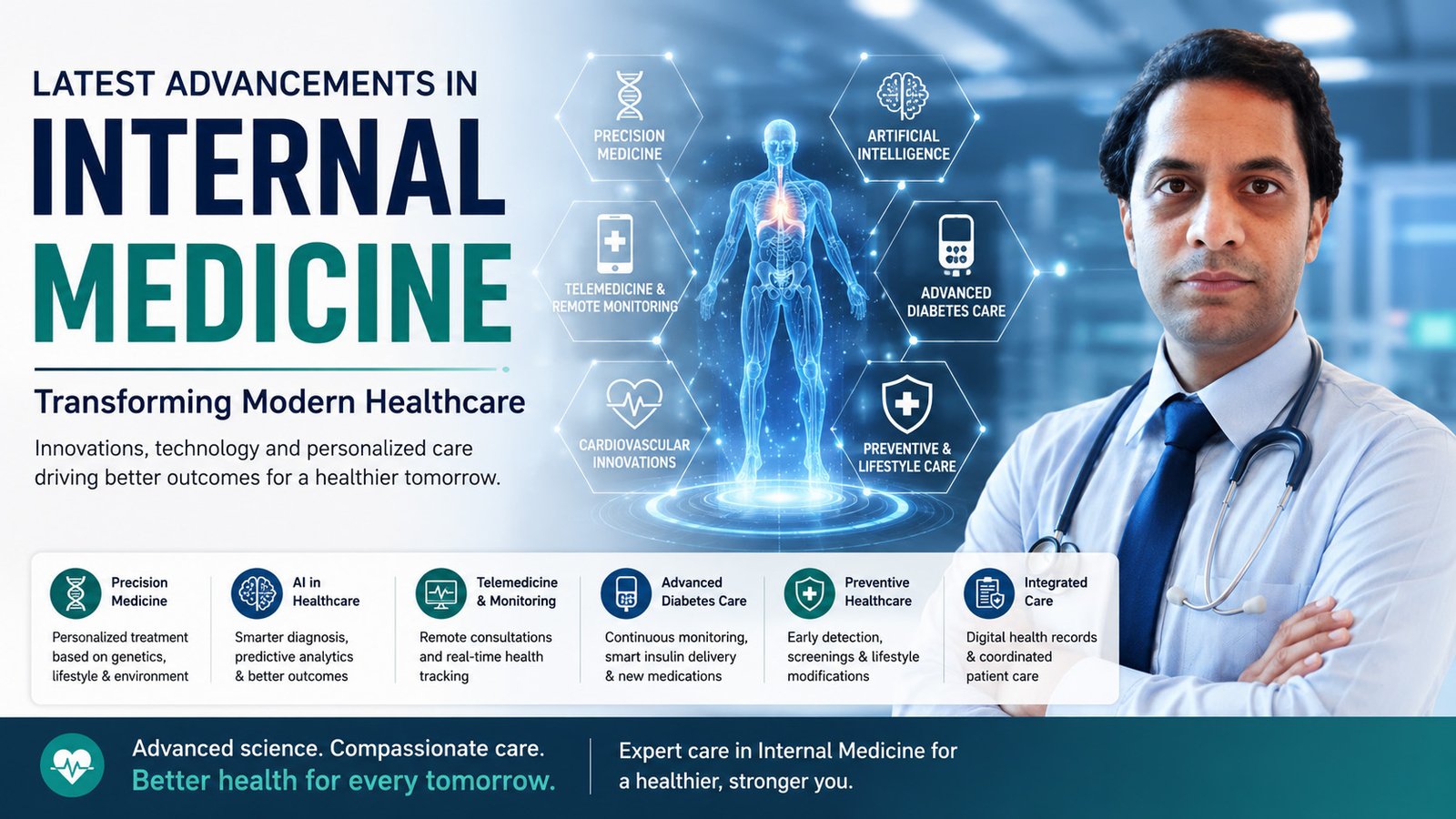
Internal medicine has witnessed remarkable advancements over the past decade, revolutionizing the way physicians diagnose, treat, and manage diseases. With the integration of innovative technologies, precision medicine, artificial intelligence, and evidence-based treatment approaches, patients today benefit from more accurate diagnoses, personalized treatment plans, and improved health outcomes.
In this article, we explore some of the latest advancements in internal medicine that are shaping the future of healthcare and enhancing patient care worldwide.
Internal Medicine is a medical specialty focused on the prevention, diagnosis, and treatment of diseases affecting adults. Internal medicine specialists, also known as physicians or internists, manage a wide range of acute and chronic medical conditions, including diabetes, hypertension, thyroid disorders, respiratory diseases, kidney disorders, infectious diseases, and cardiovascular conditions.
As medical science continues to evolve, internal medicine remains at the forefront of adopting innovative approaches to improve patient outcomes.
One of the most significant advancements in internal medicine is the emergence of precision medicine. Rather than applying the same treatment to all patients, precision medicine considers an individual's genetic makeup, lifestyle, environment, and medical history.
Benefits include:
Personalized healthcare is particularly beneficial in managing diabetes, cardiovascular diseases, autoimmune disorders, and cancer-related conditions.
Artificial Intelligence (AI) is transforming healthcare by assisting physicians in analyzing medical data more efficiently.
AI-powered tools can:
By supporting clinical decision-making, AI helps physicians provide faster and more precise diagnoses while reducing the risk of human error.
Diabetes care has significantly improved with modern monitoring technologies and treatment innovations.
Recent advancements include:
CGM devices provide real-time blood sugar readings, allowing patients and physicians to make timely treatment decisions.
Automated insulin pumps can adjust insulin delivery based on glucose levels, improving blood sugar control.
Advanced medications not only help control blood sugar but also reduce cardiovascular and kidney-related complications associated with diabetes.
Telemedicine has become an integral part of modern healthcare. Patients can now consult physicians remotely through secure digital platforms.
Advantages include:
Remote monitoring devices enable physicians to track blood pressure, glucose levels, heart rate, and oxygen saturation in real time, ensuring timely interventions when necessary.
Cardiovascular diseases remain a leading cause of morbidity worldwide. New advancements have significantly improved diagnosis and treatment.
Key developments include:
These innovations help detect heart diseases earlier and improve patient survival rates.
Thyroid disease diagnosis has become more accurate through advanced laboratory testing and imaging techniques.
Recent developments include:
These advancements allow physicians to diagnose and manage thyroid disorders more effectively.
Conditions such as asthma, chronic obstructive pulmonary disease (COPD), and respiratory infections are now managed using advanced therapies and monitoring tools.
New approaches include:
These innovations improve symptom control and reduce hospitalizations.
Internal medicine is increasingly focused on disease prevention rather than simply treating illness after it occurs.
Preventive strategies include:
Preventive healthcare helps identify risk factors early and promotes long-term wellness.
Electronic Health Records (EHRs) have transformed patient management by improving communication among healthcare providers.
Benefits include:
Integrated healthcare systems allow physicians to make more informed treatment decisions.
The future of internal medicine lies in combining medical expertise with technological innovation. Advances in genomics, artificial intelligence, digital health, wearable technology, and personalized medicine are expected to further enhance patient care.
As healthcare continues to evolve, internal medicine specialists will play a crucial role in delivering comprehensive, patient-centered care that emphasizes prevention, early diagnosis, and effective treatment.
The latest advancements in internal medicine are transforming healthcare by making diagnosis more accurate, treatments more personalized, and patient care more accessible. From precision medicine and artificial intelligence to advanced diabetes management and telemedicine, these innovations are improving health outcomes and quality of life for millions of patients.
© Dr Rishikesh Dessai Powered by The Story door